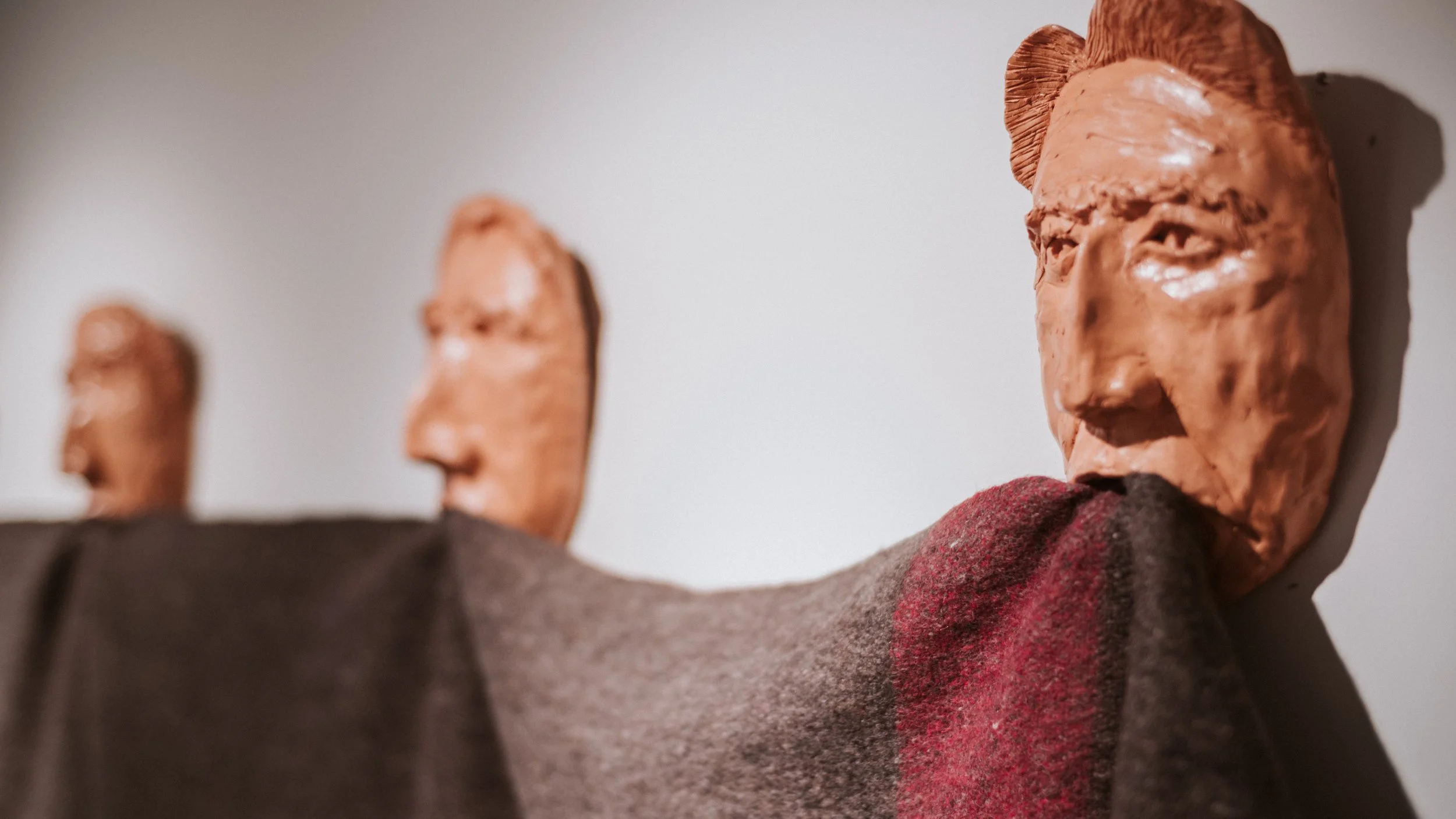
Page Heading
History and Culture
Today, the ancestral territory of the Kumeyaay Nation spans lands that are now divided into the non-Kumeyaay counties of San Diego and Imperial. There are currently 13 Kumeyaay Nation bands whose traditional territories lie north of the U.S.–Mexico border. Each reservation's band may have its own constitution, government, and membership requirements. As sovereign tribal nations, each band maintains its own distinct relationship with the federal government of the United States.
The traditional Kumeyaay were accomplished hunters and resourceful farmers who developed an extensive understanding of the ecosystems, wildlife, plants, and waterways within their homelands. Their ancestors upheld a deeply spiritual culture grounded in their language, traditions, and shared identity. These values and practices continue to be respected and preserved by Kumeyaay communities today.
UNITED STATES Southern California Kumeyaay bands:
Campo Band of the Kumeyaay Nation
Viejas Band of Kumeyaay Indians
Barona Band of Mission Indians
San Pasqual Band of Indians
Inaja Cosmit Indian Reservation
Capitan Grande Indian Reservation
Santa Ysabel Band of Diegueño Indians
Ewiiaapaayp Band of Kumeyaay Indians aka Cuyapaipe
Manzanita Indian Reservation
La Posta Indian Reservation
Jamul Indian Village A Kumeyaay Nation
Mesa Grande Indian Reservation
Sycuan Band of the Kumeyaay Nation
BAJA CALIFORNIA MEXICO Kumeyaay bands:
Santa Catarina (Kumeyaay Paipai Pai-Pai)
California Mission Period
The Catholic mission system existed from 1769 to 1834. Founded in 1769 by the Spanish missionary Fray Junípero Serra, Mission Basilica San Diego de Alcalá was the first of 21 missions established by the Spanish in California during this period. The goal of the mission system was to spiritually conquer Indigenous peoples and persuade them to abandon their traditional ways of life in order to live within the confines of the missions. The missions were built and maintained using forced Kumeyaay labor, and workers and their families often endured harsh punishment, starvation, abuse, and mistreatment.
This period was marked by Indigenous resistance in the face of disease, massacres, enslavement, unratified treaties, forced assimilation, and acculturation. As a result, the Kumeyaay population declined dramatically, from nearly 30,000 people to approximately 3,000. A resilient people who deeply valued their traditional freedom and way of life, the Kumeyaay strongly resisted the foreign invasion of their territory. In November 1775, for example, more than 800 Kumeyaay united to burn Mission Basilica San Diego de Alcalá.
Local Archaeological Sites
Beneath the residential streets of La Jolla Shores lies one of the most significant ancient Native American village sites in San Diego County. The Spindrift site (CA-SDI-39), associated with the Kumeyaay and the earlier La Jolla Complex (ca. 6,000 BCE), sits on the coastal bluffs that were prime settlement areas for ancestral populations over thousands of years.
First recorded by archaeologist Malcolm Rogers in the late 1920s and further investigated in the 1960s, the site was the subject of a major historical study in 1999 and a comprehensive archaeological investigation in 2017. Excavations have uncovered extensive evidence of shellfish harvesting, lithic tools, midden deposits, and human remains.
Similarly, a bedrock mortar stone at Cuvier Park—used by Kumeyaay women over thousands of years to grind grain, acorns, and medicinal herbs—was removed in 2017 without tribal consultation to accommodate sidewalk expansion. Stored in a city operations yard, the stone became the subject of considerable debate and a formal city acknowledgment that “there should have been more oversight.”
Following an apology from La Jolla Parks & Beaches to the tribal councils, the stone was returned to Cuvier Park in October 2019. In 2021, members of various Kumeyaay tribal councils held a blessing ceremony and marked the site with a plaque reading: “May the resiliency of the Kumeyaay forever be remembered.” The episode is a reminder that La Jolla’s relationship with its indigenous history is not a matter of the distant past but of living accountability.
Interview with Tribal Historian Ethan Banegas
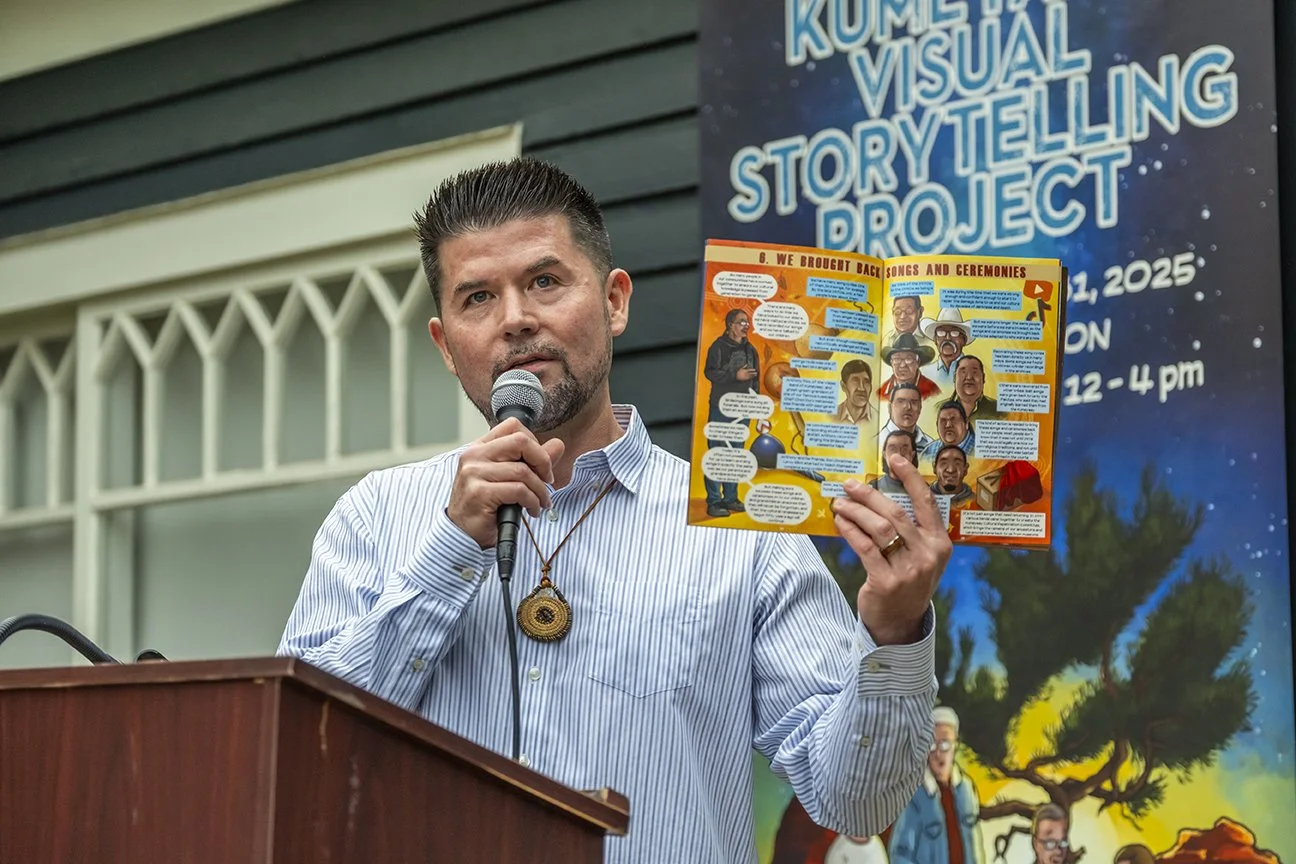
This video, filmed by David’s Harp Foundation, highlights one of multiple interviews conducted with Tribal Historians who created the Kumeyaay Visual Storytelling Project (KVSP). KVSP was the subject of a Summer 2025 exhibition at LJHS. The complete interviews will be archived in LJHS’s collection.

Past Exhibitions
Kumeyaay Visual Storytelling Project
June 14 - October 19, 2025
“Visual storytelling has been a part of Kumeyaay tradition since time immemorial.”
The Kumeyaay Visual Storytelling Project is an immersive exhibition that invites viewers into the pages of the two-part graphic novel Our Past, Present, and Future, and Beyond Gaming, authored by Tribal Historians Ethan Banegas, Michael Connolly Miskwish, Lorraine Orosco, and Stanley Rodriguez, and illustrated by John Swogger.
Voices from the Rez
June 4 - September 4, 2022
Contemporary art created by Native Americans from the reservations of Southern California. Curated by Dana Hicks, PhD. Featured artists: Chuck Contreras, Gail Werner, Gerald Clarke, Gordon Johnson, James Luna, Jamie Okuma, Johnny “Bear” Contreras, Robert Freeman, Sandra Okuma and Tracy Lee Nelson (Mataweer).