
Postcard Highlights
Start with a highlight, stay for the stories. Browse standout pieces from our collection and uncover the histories that shape La Jolla and inspire deeper exploration.
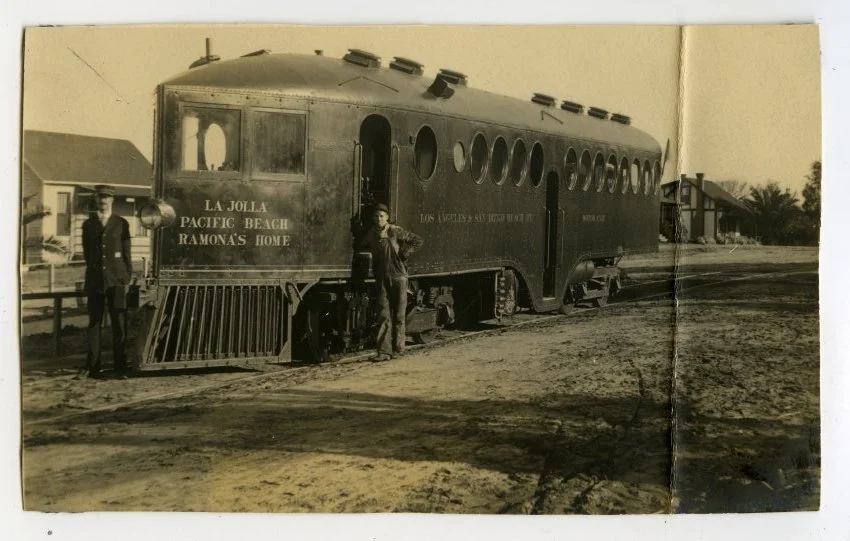
The San Diego, Pacific Beach, and La Jolla Railroad transformed La Jolla from an isolated cove into a reachable resort.
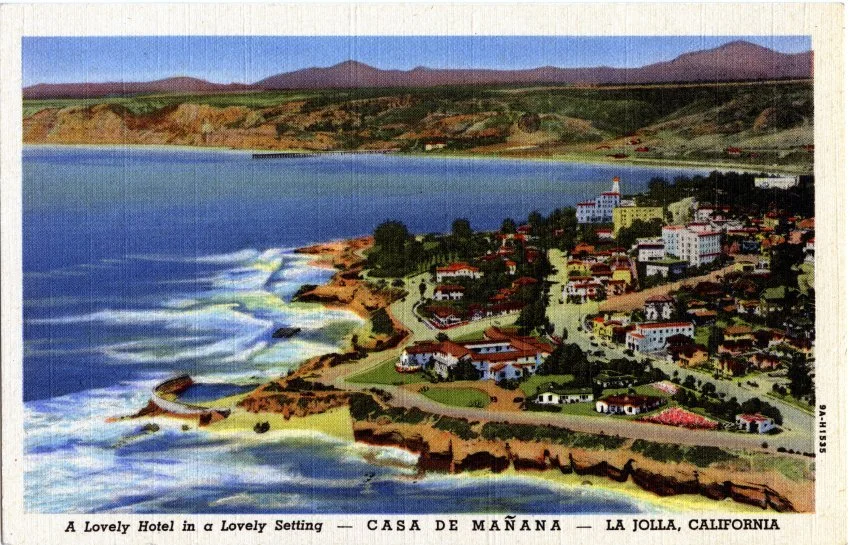
In 1924 Casa de Mañana opened. A resort hotel designed by Edgar V. Ullrich for founder Isabel Hopkins, Casa de Mañana showcased Spanish Colonial Revival style with courtyards, tropical plants, and sweeping ocean views. It was converted into an upscale retirement community in 1953.
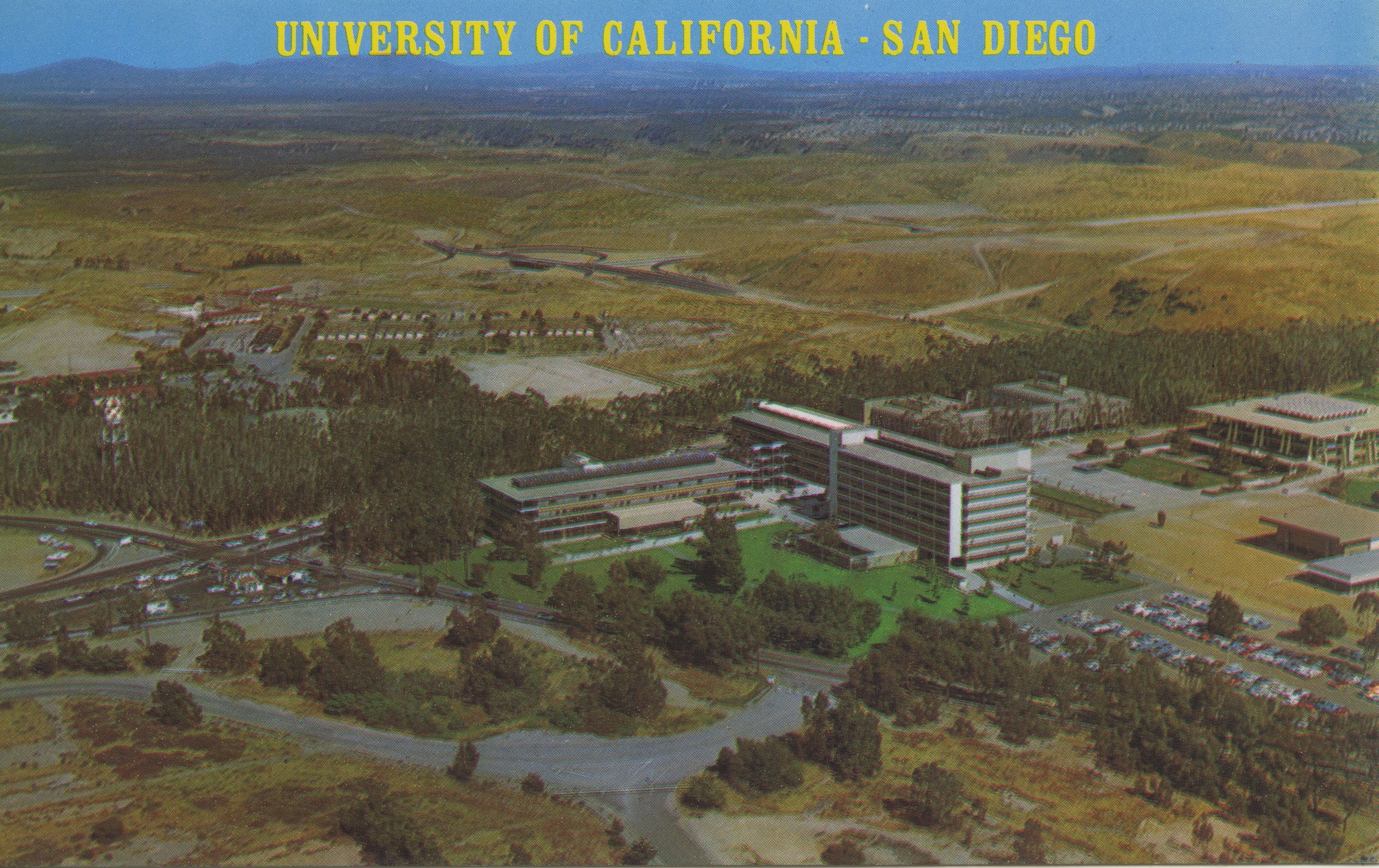
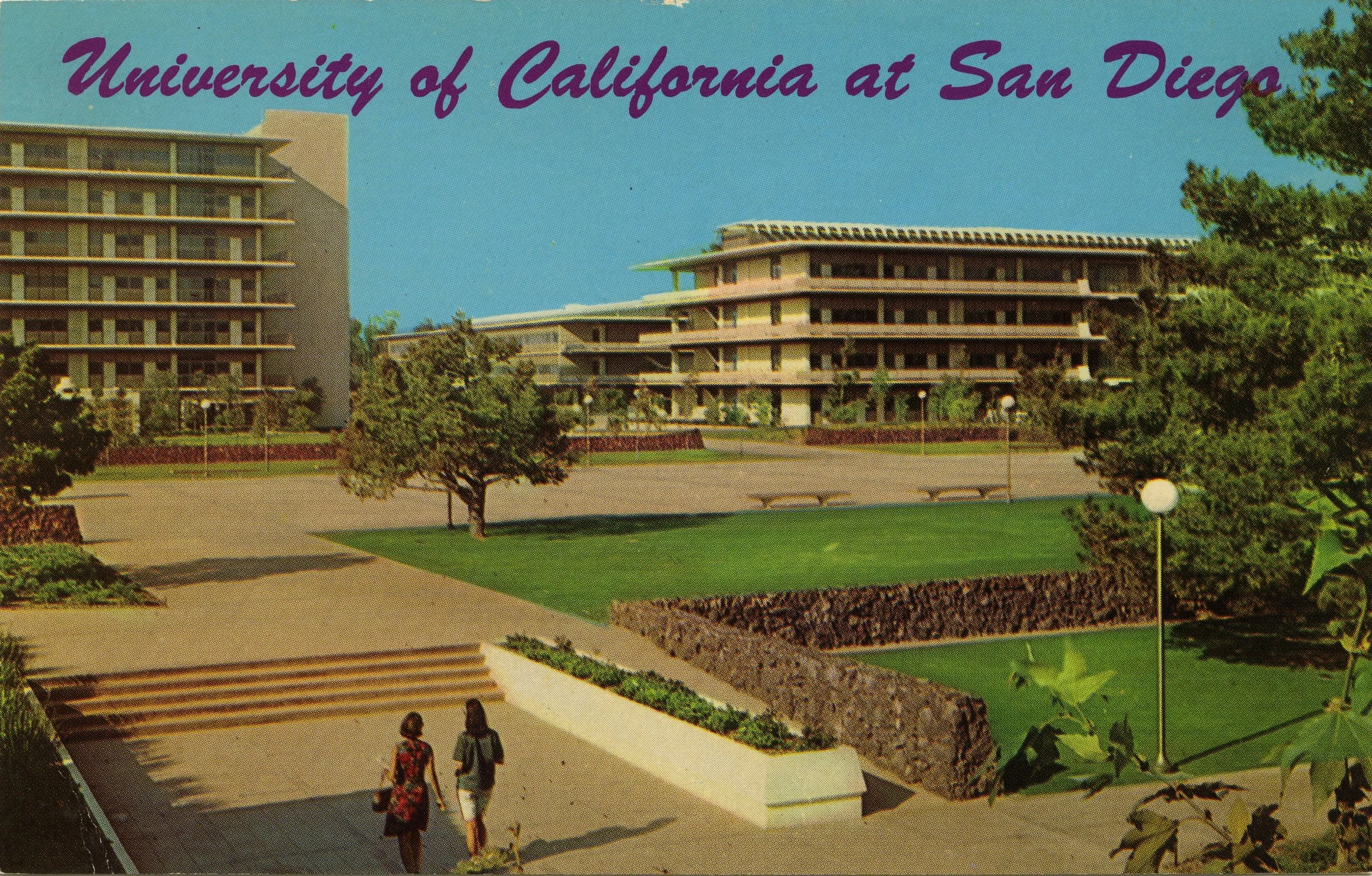
UC San Diego established on former Camp Callan land in 1960. The opening of the University of California, San Diego cemented La Jolla’s transformation from a resort village into a world-class center of science and research.
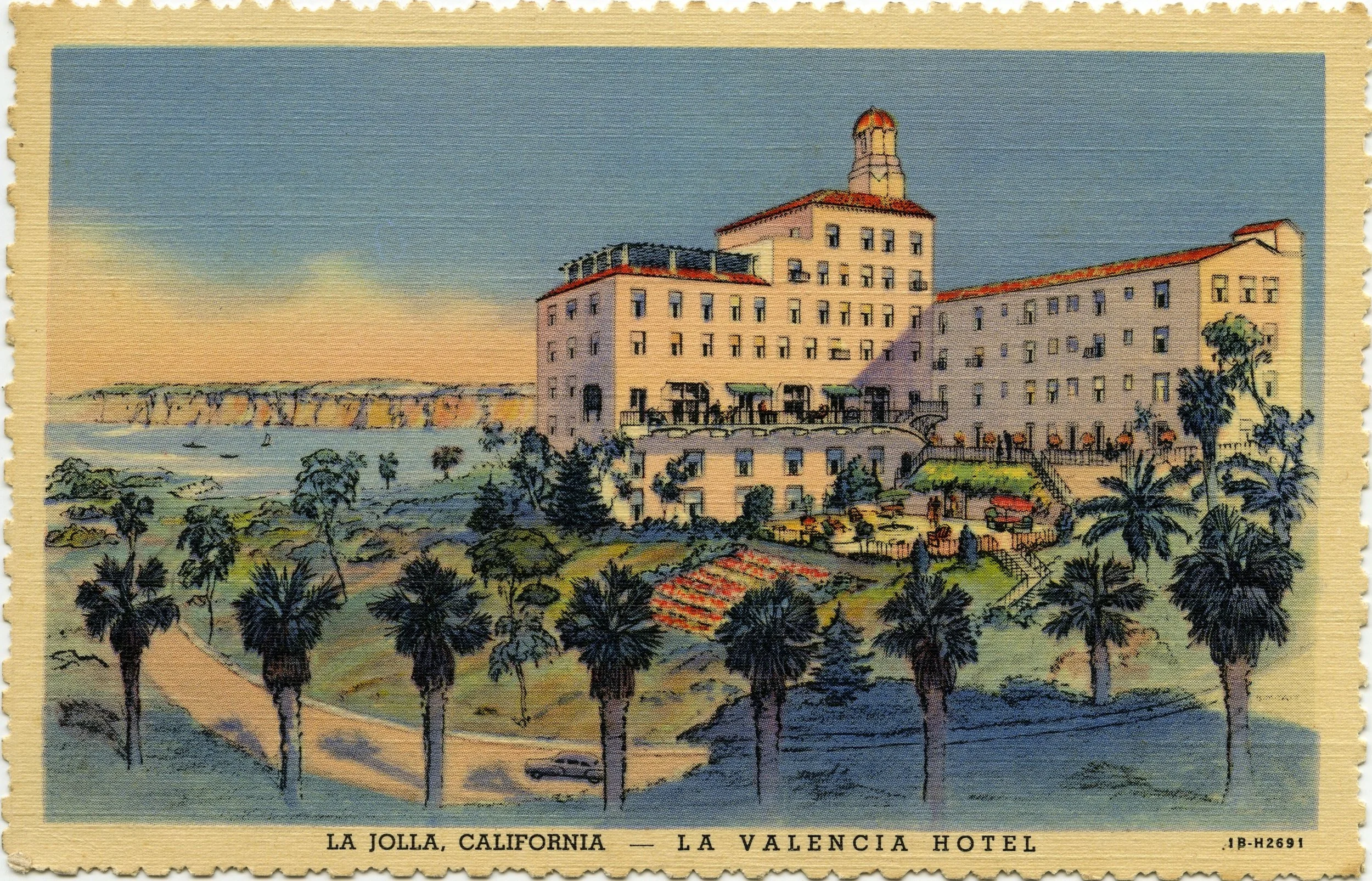
La Valencia Hotel opened in 1926. The “Pink Lady” became La Jolla’s most iconic landmark, drawing Hollywood celebrities and cementing the village’s reputation as a glamorous resort.
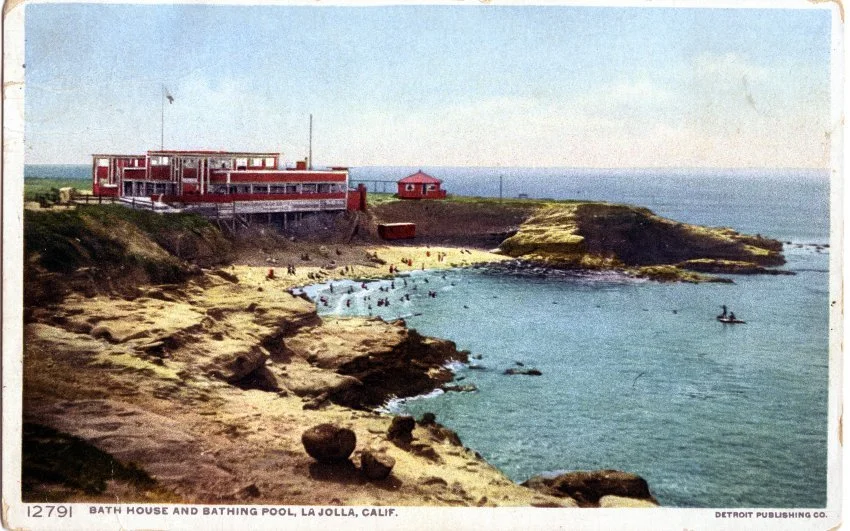
The La Jolla bathhouse and a pavilion near the Cove. The railroad company financed the construction to serve as an entertainment center.
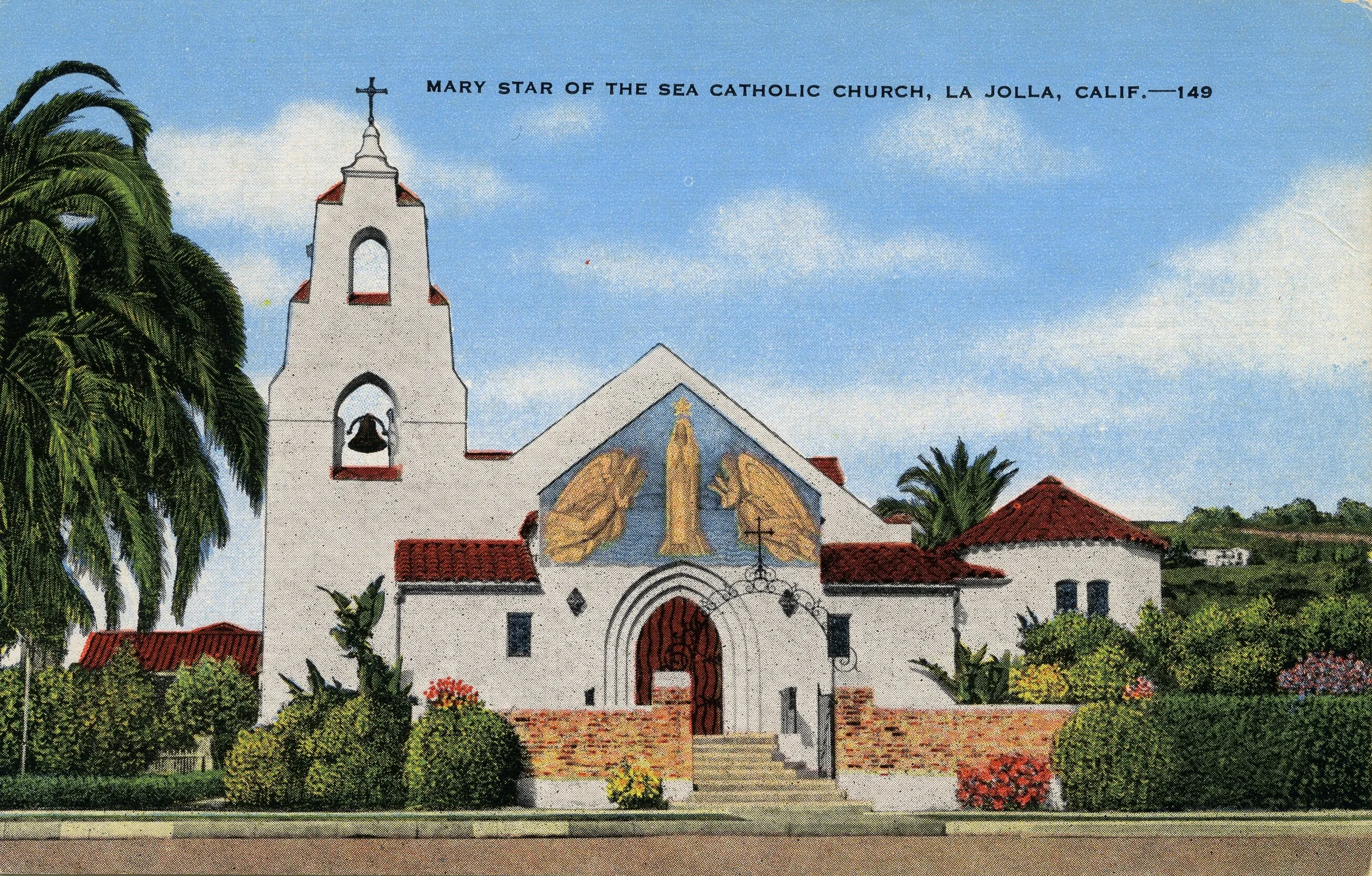
Mary Star of the Sea Catholic Church, La Jolla
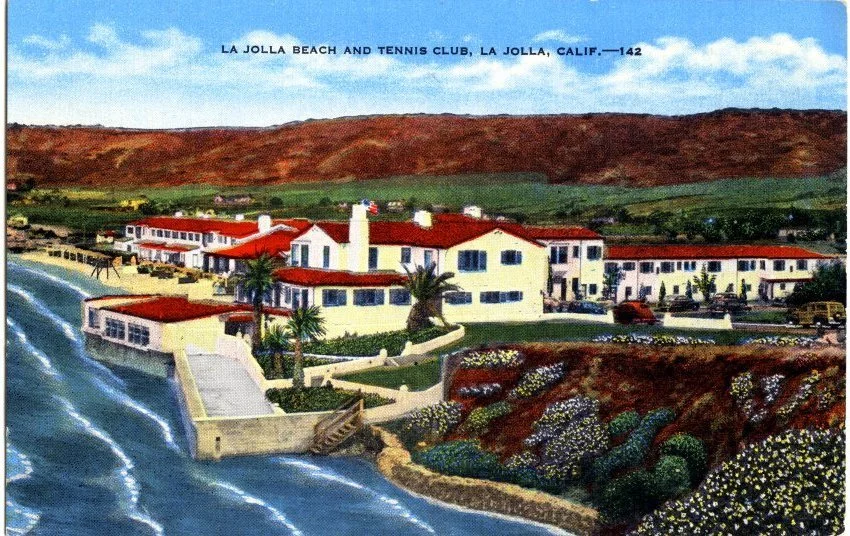
The La Jolla Beach & Yacht Club opened in La Jolla Shores in 1927. The property was purchased by Frederick William Kellogg in 1935 and reimagined as an exclusive oceanfront tennis resort, the La Jolla Beach & Tennis Club.
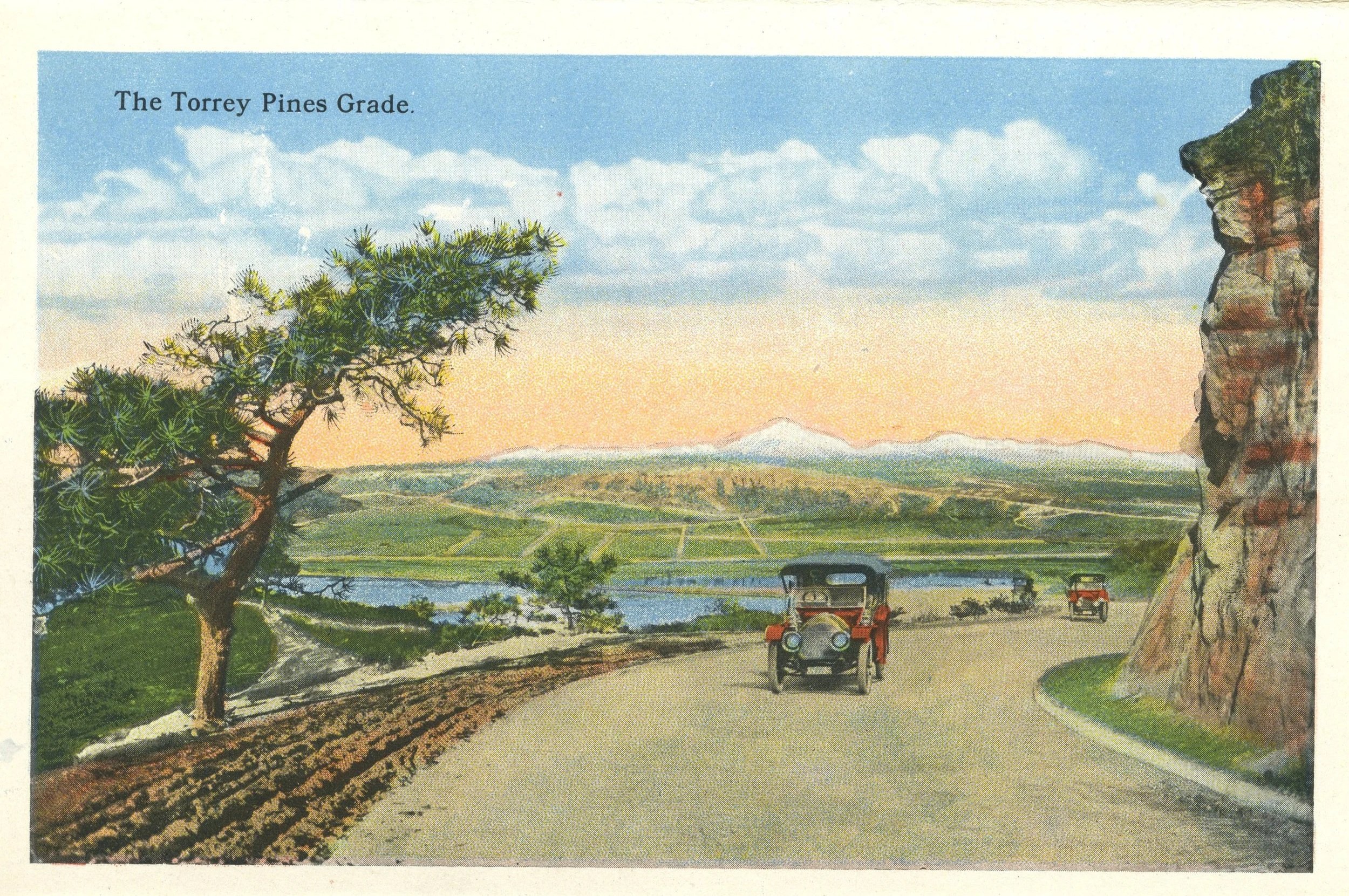
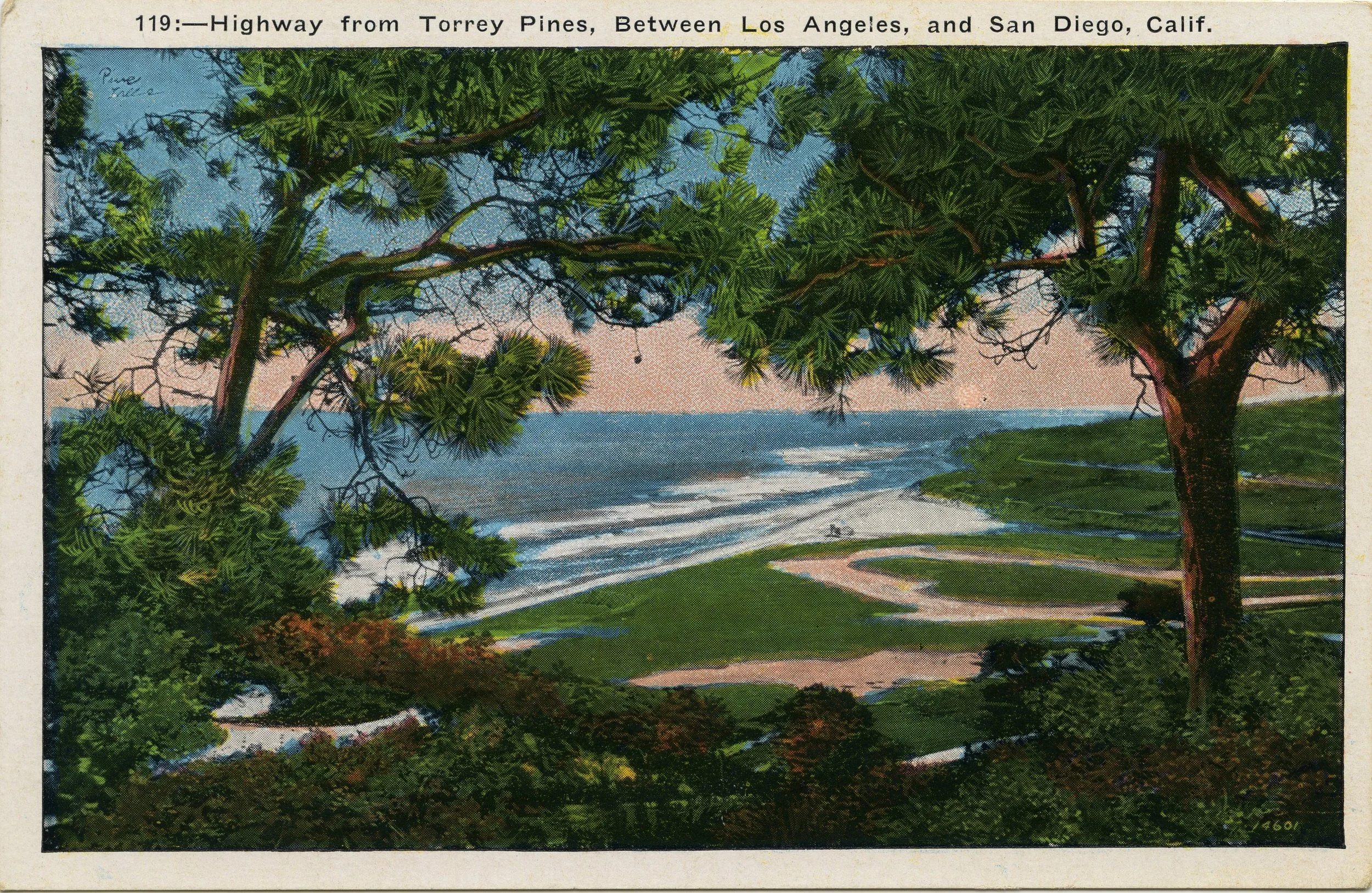
In 1915 the City of San Diego established a park to protect rare and ancient Torrey Pine, one of the earliest acts of conservation in California’s coastal history.
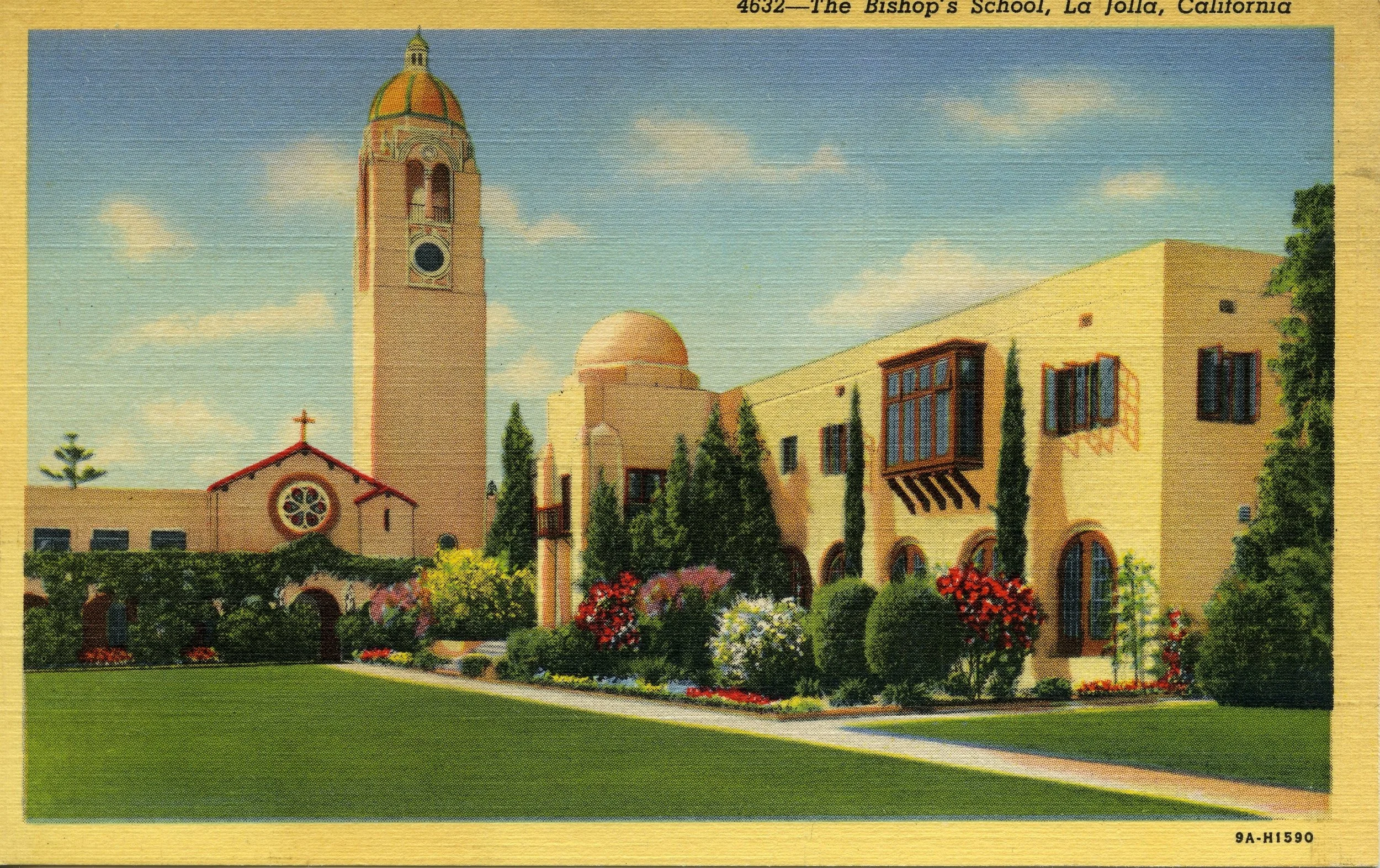
The Bishop’s School was founded in 1909. With the financial backing of Ellen and Virginia Scripps, The Bishop’s School remains one of the neighborhood’s most architecturally distinguished campuses.
Staff and Intern Favorites
Visit our archive through our online collection.